







Aftermath
Aftermath brought together two new commissions by Sophie Hayes and Huma Mulji for the first exhibition in Foreground’s Document and Location programme, which explored the artists’ shared interest in how the representation of place can be used as a vehicle for the communication of psychological and emotional states.
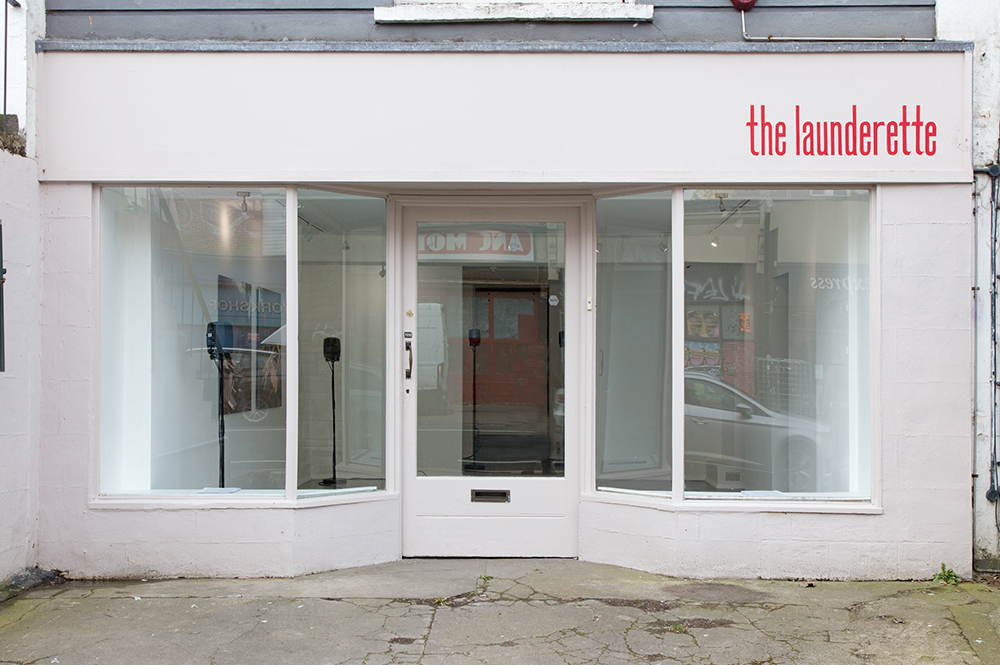
Hayes and Mulji’s works were presented in a former launderette and a former restaurant as two concurrent solo exhibitions in what had recently become two of Bristol’s newest artist-run venues: KIT FORM and The Launderette. The exhibitions were situated less than 5 minutes’ walk from each other in the city’s Stokes Croft district.
Curated by Foreground director Simon Morrissey and emerging from an extended research dialogue between the two artists, the project brought together Hayes’ new work – which used sound to radically author the viewers psychological perception of the photographic representation of a mundane location – with Mulji’s site-specific installation that suggested the devastated aftermath of human displacement through sculpture and material intervention.
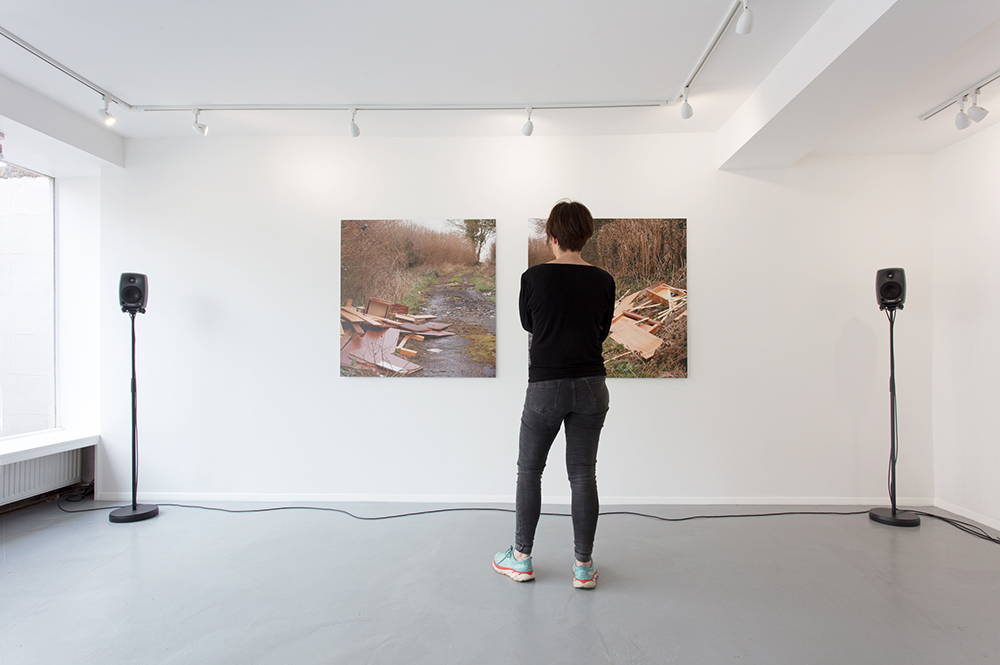
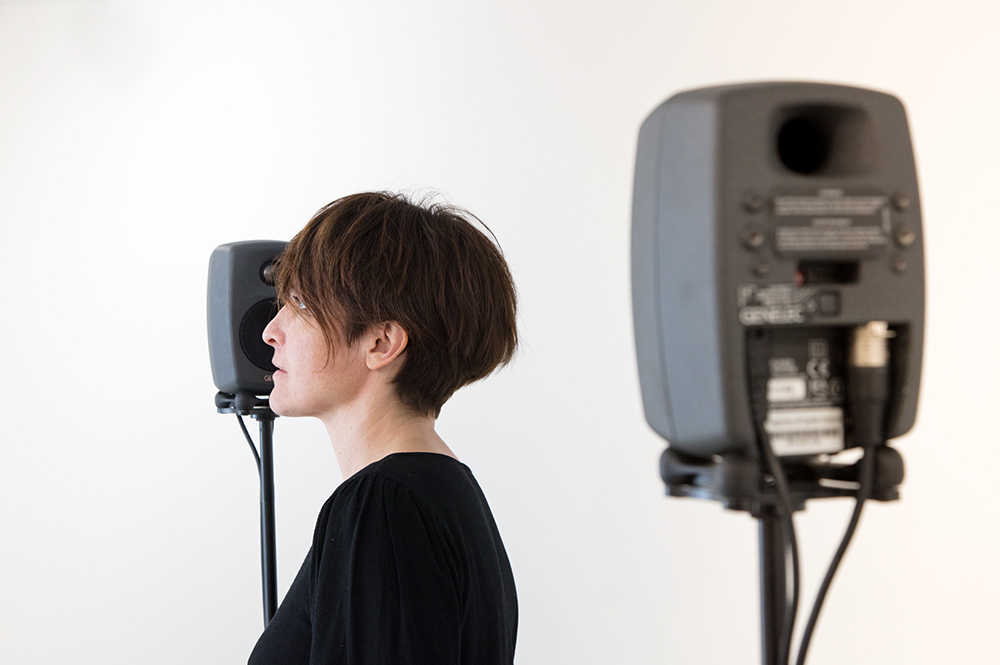
Hayes’ installation for a former launderette depicted a nondescript rural fly tip in an unspecified location through two large-scale photographs – the aftermath of illegal waste disposal. Piles of discarded domestic furniture that lie on the left and right-hand side of a dead-end road were split into two images. These images were accompanied by an intrusive abstract audio composition that dominated the viewer and projected a sense of mounting anxiety and trauma into the uneventful rural location in the images. This composition was accompanied by a second soundtrack in the adjoining rear space. Two small speakers mounted on stands, which loosely suggested human figures, were positioned opposite each other. Garbled sound emanated first from one speaker then the other – a mixture of interference and distortion reminiscent of a broken conversation. Together, the seemingly disparate elements of the installation built to suggest the gaps in understanding that result from opposing viewpoints that fail to connect.
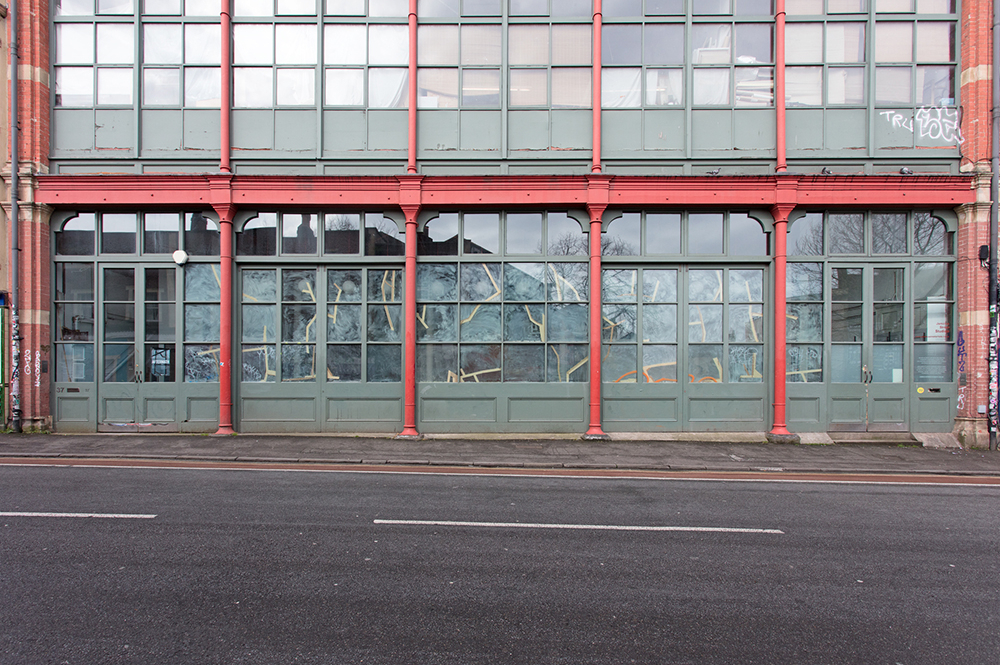
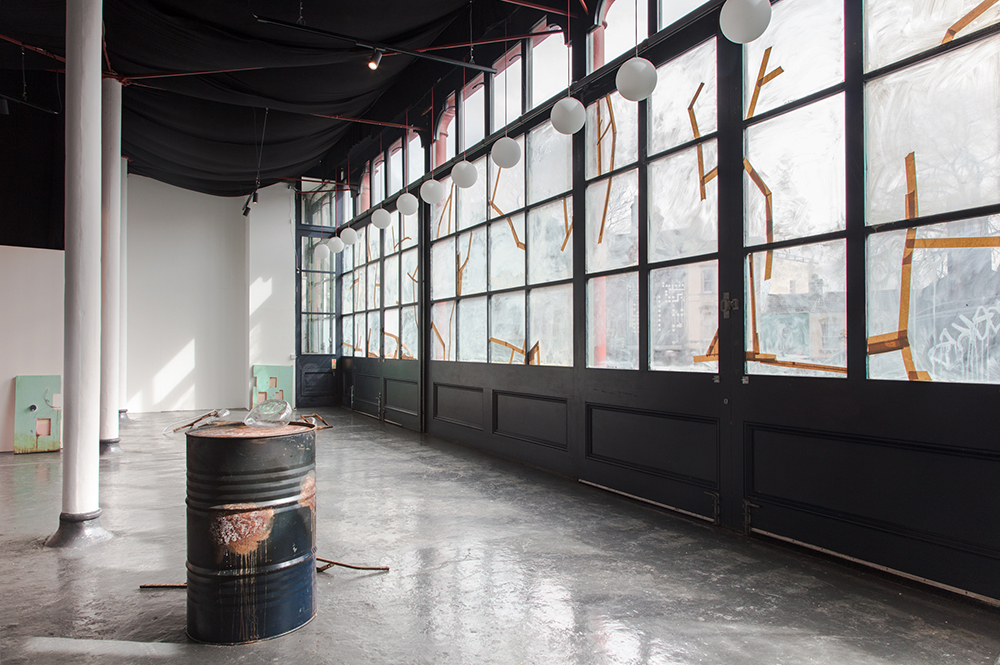
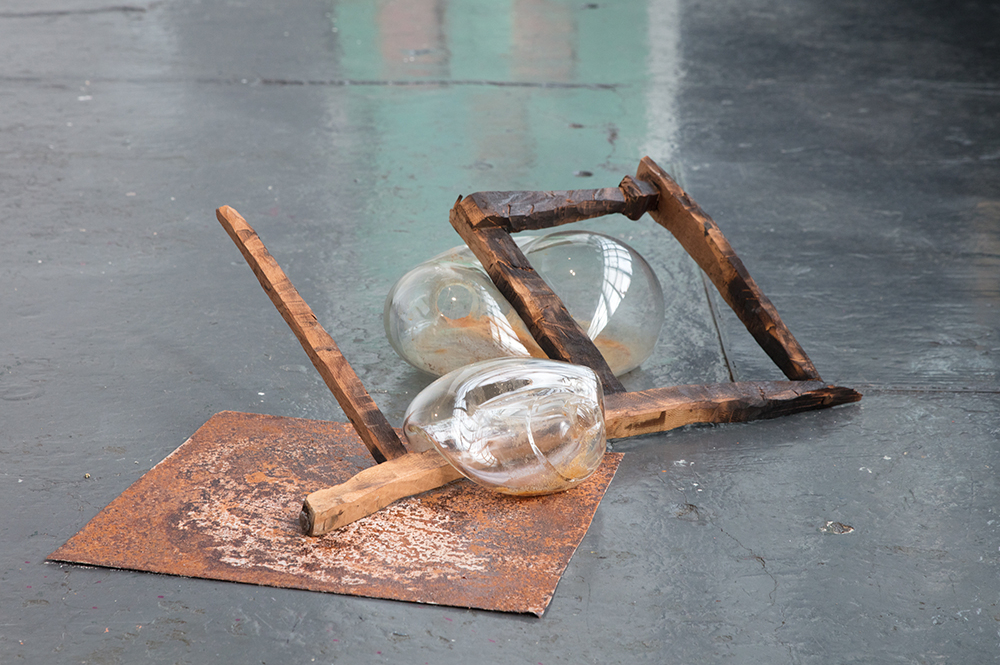
On the site of an abandoned restaurant, Mulji presented a site-specific installation that conjured the idea of another place, perhaps some form of workshop, that had been relocated into KIT FORM’s post-industrial space. The windows that made up KIT FORM’s glazed elevation had been blanked out and taped to hold its now broken panes together. Fragments of walls from other spaces lay around the space discarded, electrical components hanging from them. Crude wooden stools acted as matter-of-fact supports for a family of blunt blown glass vessels that nestled against burnt indentations in the wooden objects, as if they had scorched the surfaces they rested on, on contact. It was unclear whether these things were simply the results of industrial manufacturing, or laborious repurposing processes, but the glass objects also suggested they were some form of traumatised body inhabiting the scenario. Dislocated and displaced, Mulji’s installation spoke of the complex losses embedded in so much migrant experience – being made no longer part of where you are from whilst neither belonging to the place you are now in.
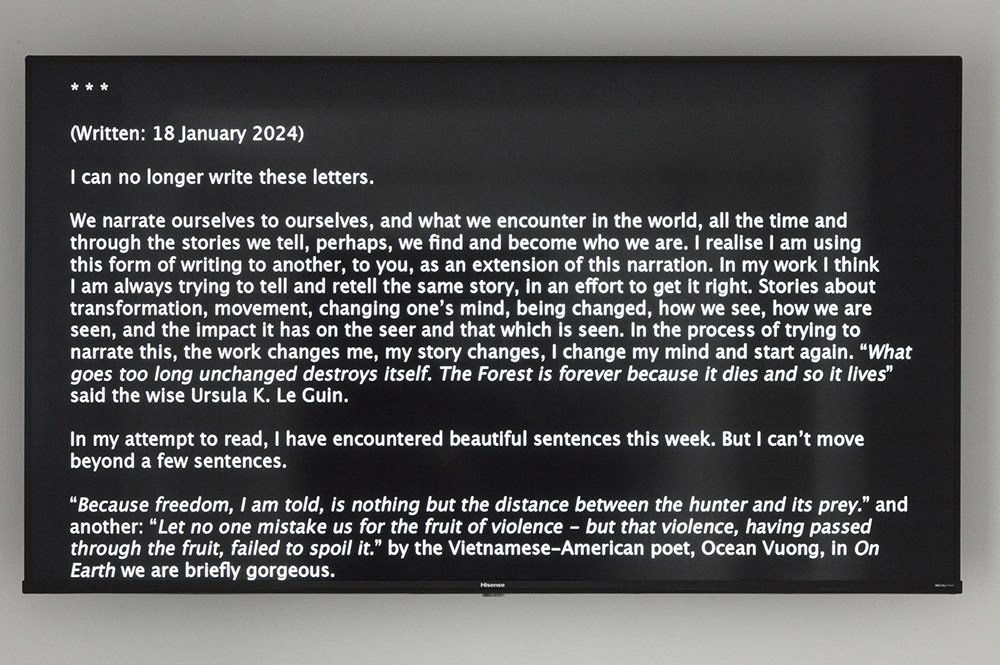
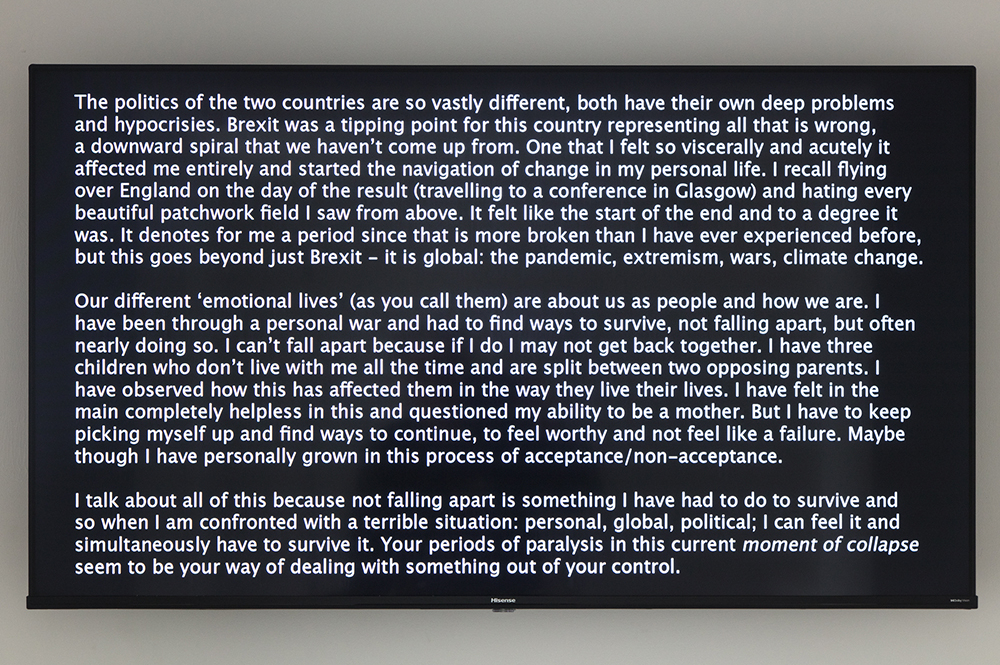
Colleagues and friends who met in Bristol in 2017 despite coming from very different parts of the world, Hayes and Mulji engaged in an in-depth research dialogue during the making of their new works for Aftermath. This dialogue saw them record the inspirations, insecurities, pressures and preoccupations that made up the 8 months before the exhibitions through candid ‘letters’ they wrote to each other over email.
Shared as a screen-based text work at both the gallery sites and online, the letters between the artists provided their audience with intimate access to the private intellectual and emotional questions that led to Aftermath.
Supporters