
Aftermath
Huma Mulji
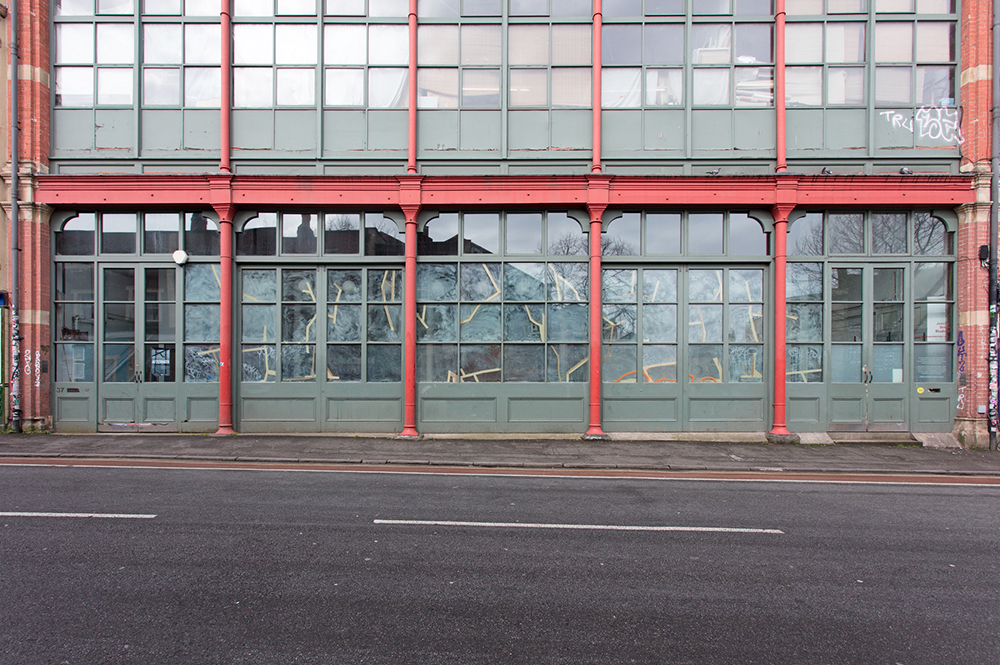
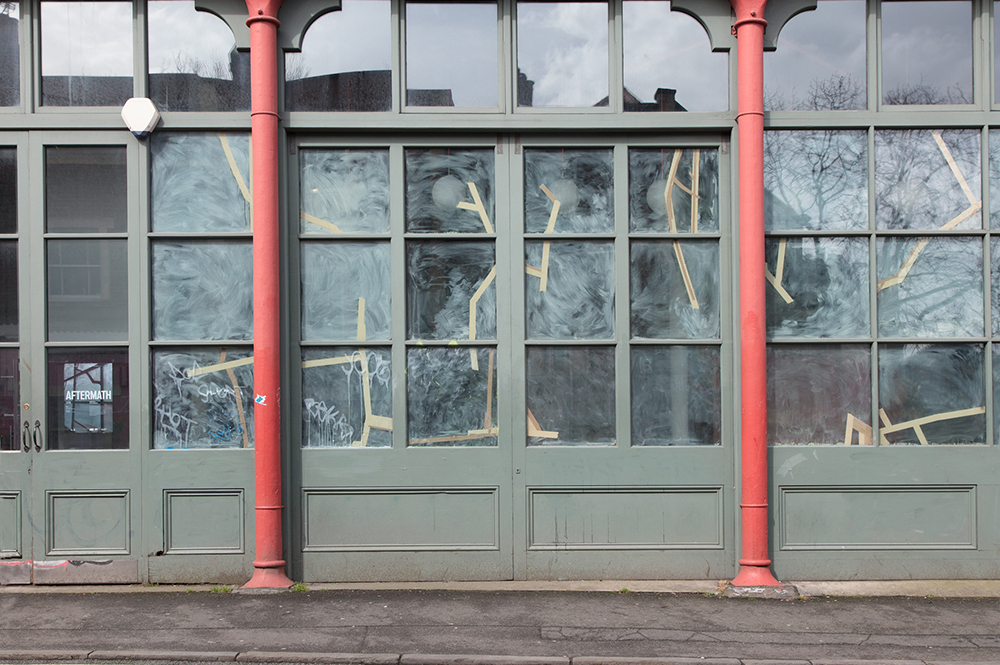
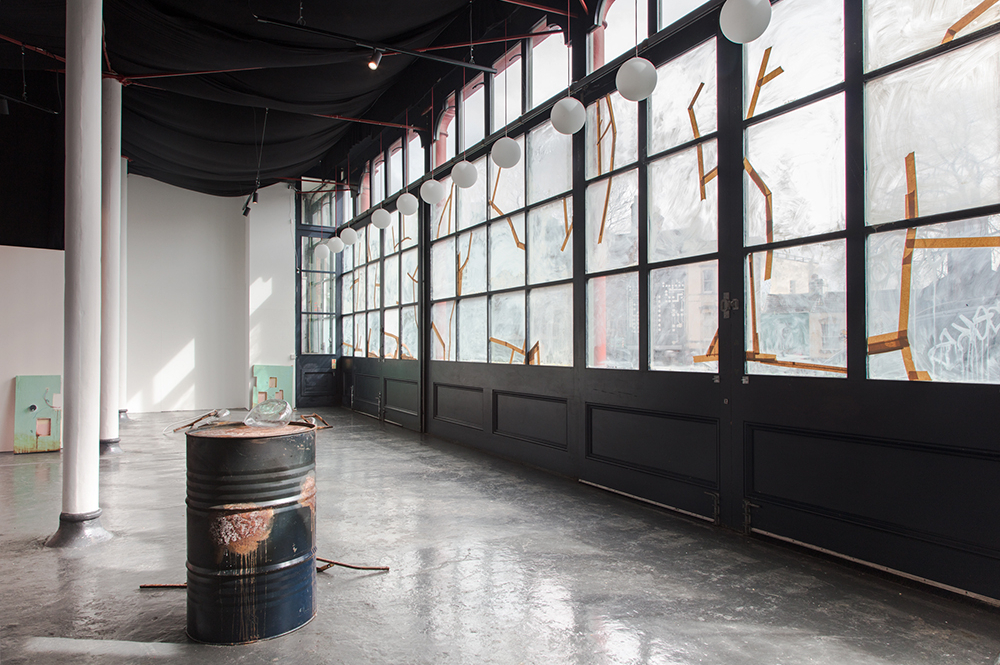
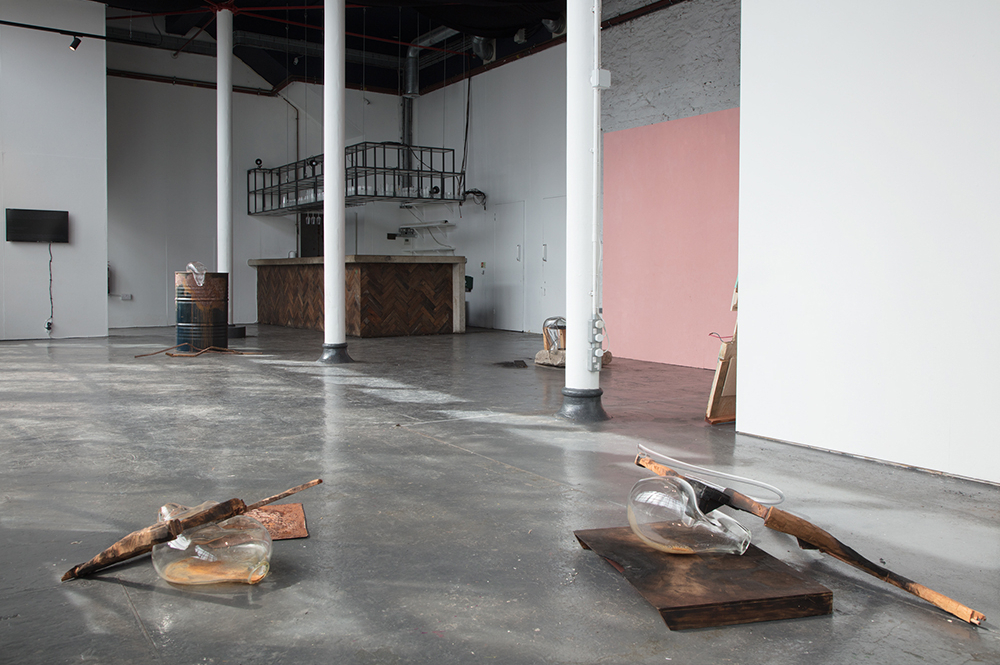
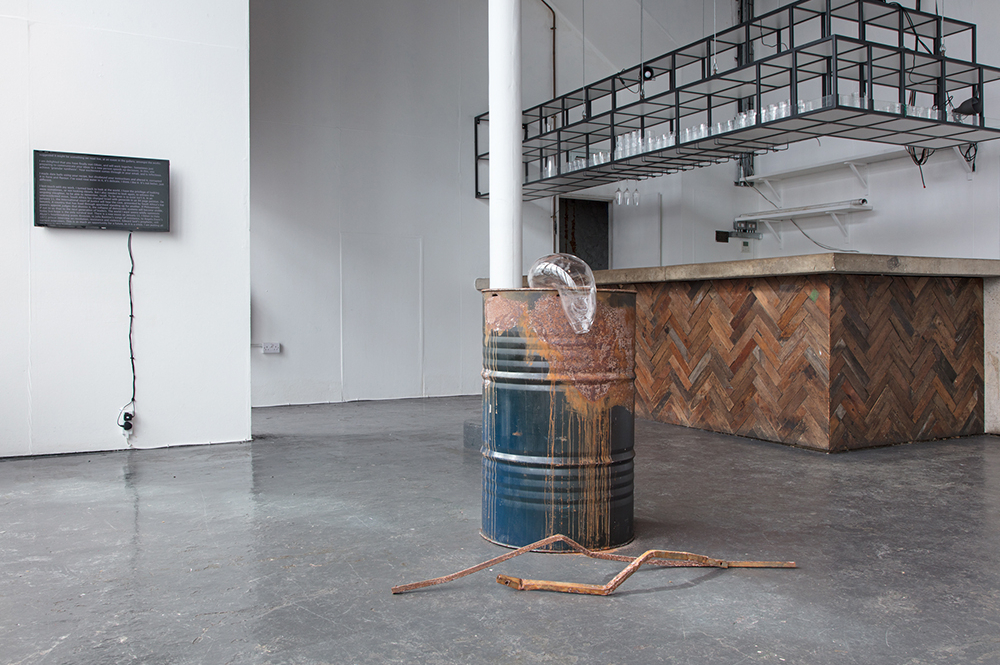
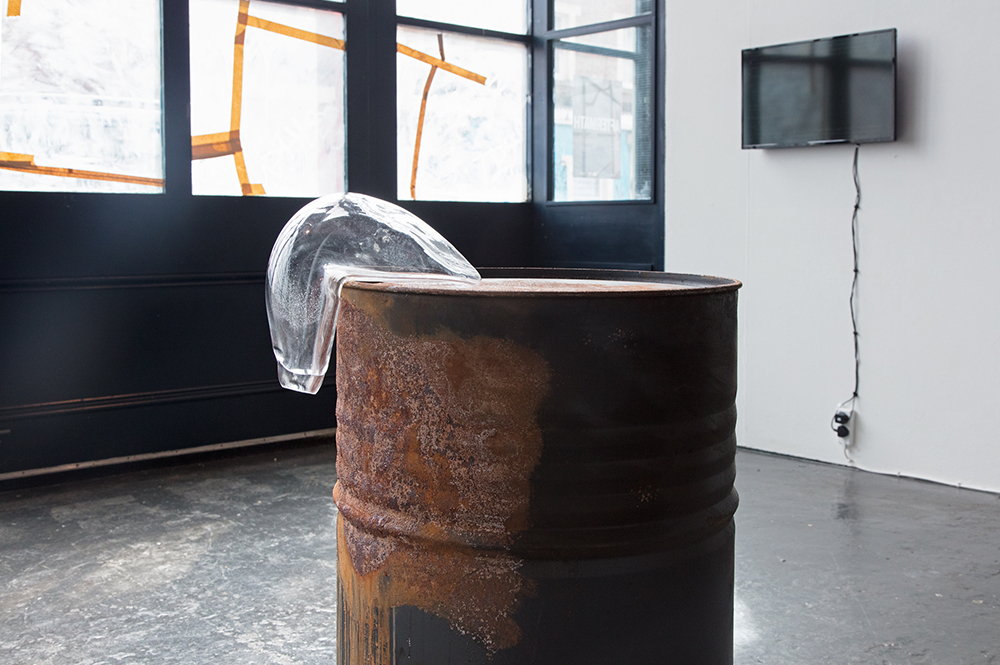
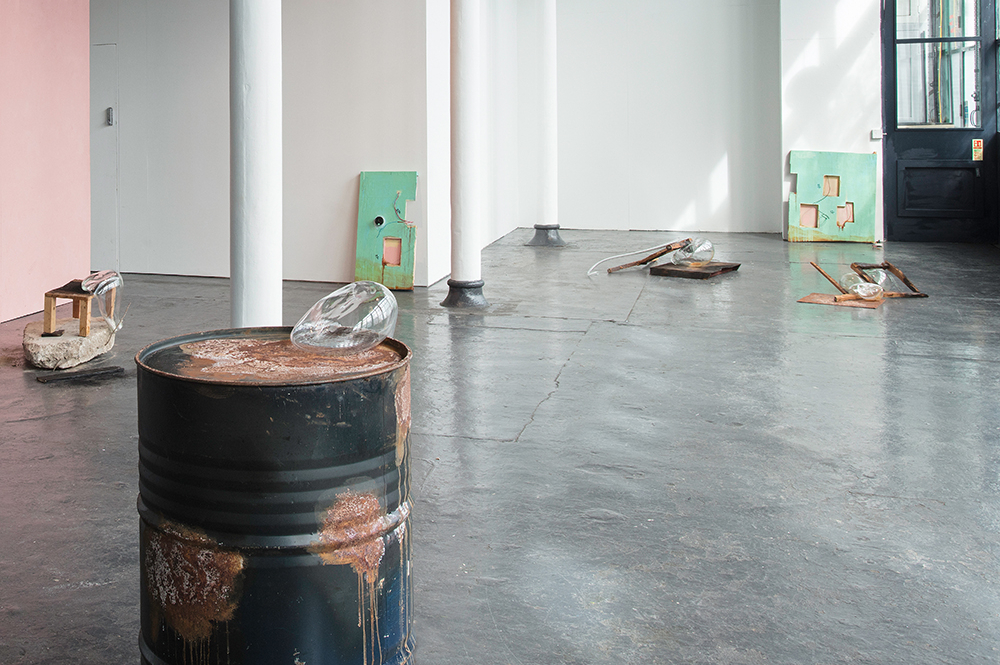
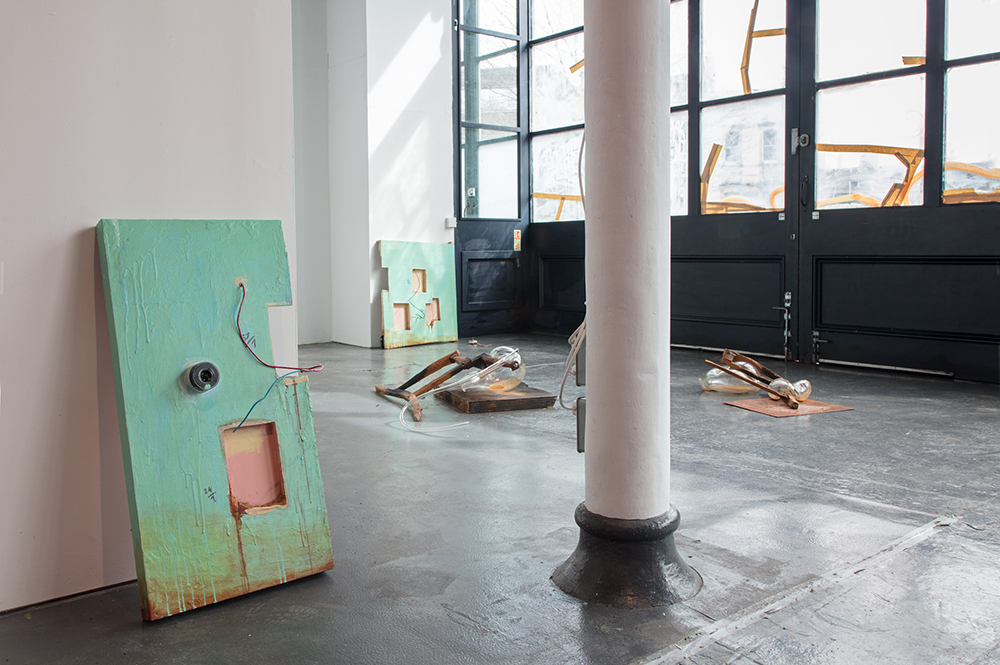
On the site of an abandoned restaurant, Mulji presented a site-specific installation that conjured the idea of another place, perhaps some form of workshop, that had been relocated into KIT FORM’s post-industrial space.
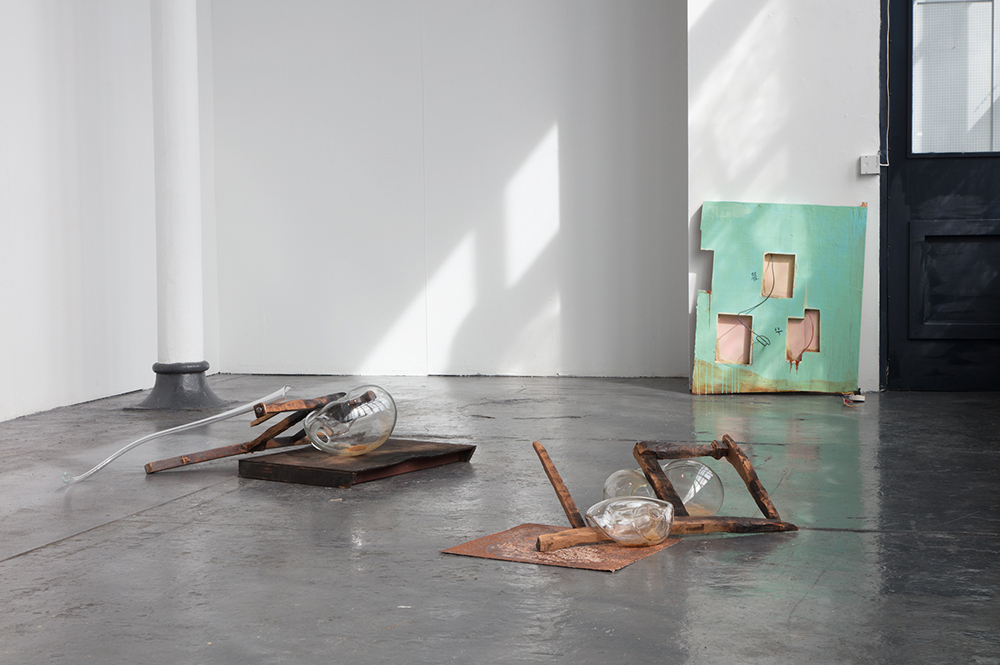
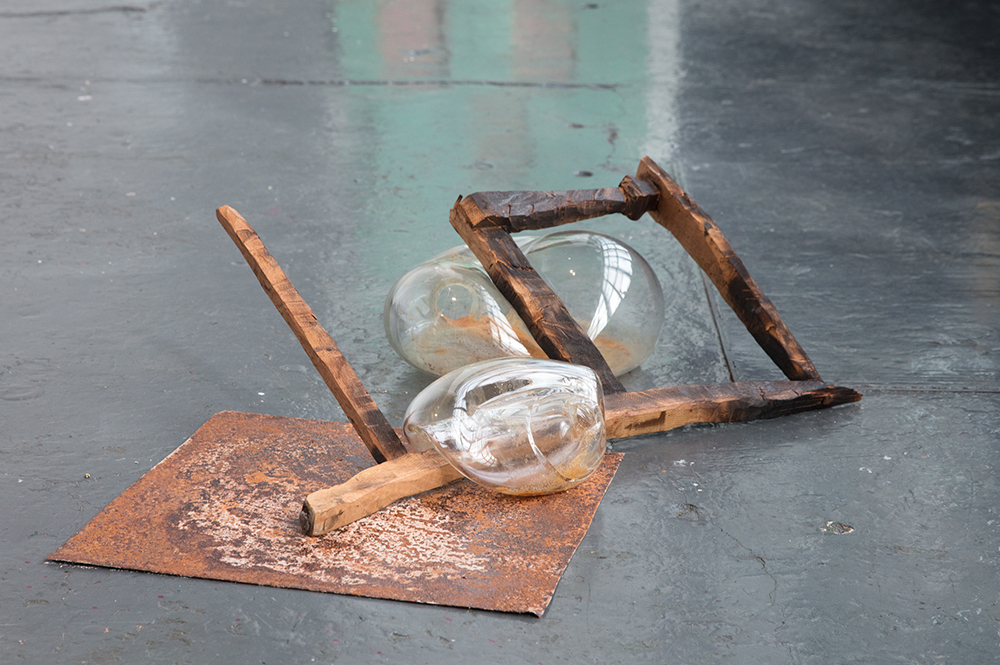
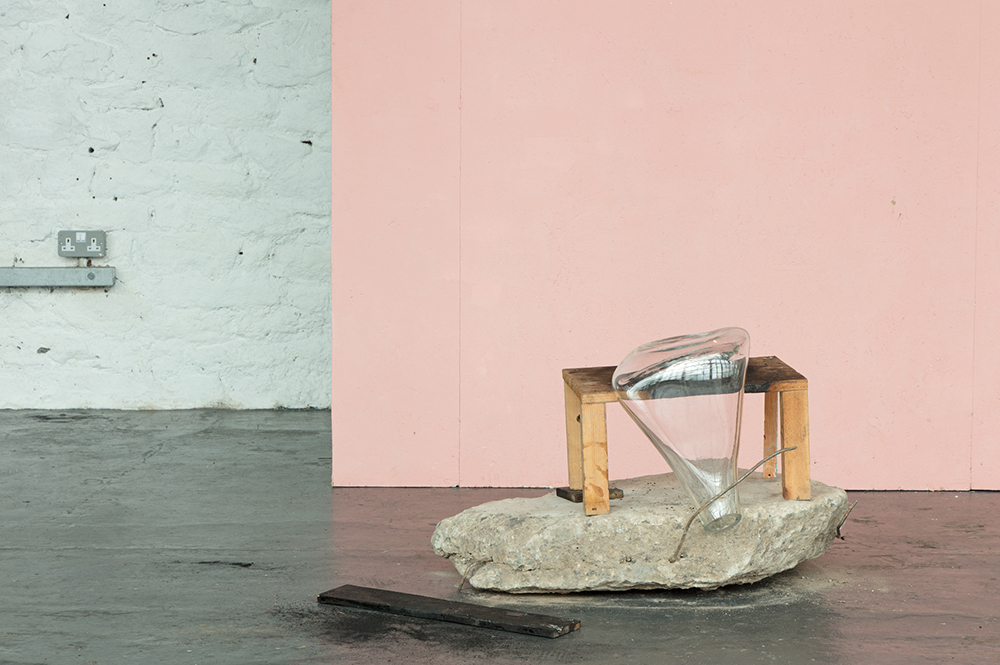
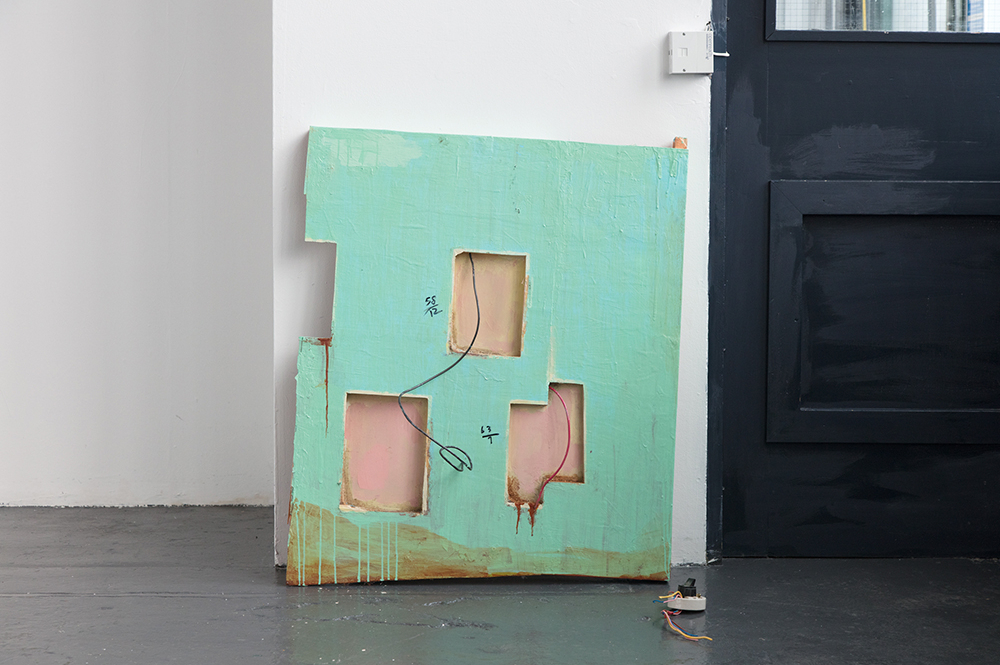
The windows that made up KIT FORM’s glazed elevation were blanked out and taped to hold its broken panes together. Fragments of walls from other spaces lay around the space discarded, electrical components hanging from them. Crude wooden stools acted as matter-of-fact supports for a family of blunt blown glass vessels that nestled against burnt indentations in the wooden objects, as if they had scorched the surfaces they rested on, on contact. It was unclear whether these things were simply the results of industrial manufacturing, or laborious repurposing processes, but the glass objects also suggested they were some form of traumatised body inhabiting the scenario. Dislocated and displaced, Mulji’s installation spoke of the complex losses embedded in so much migrant experience – being made no longer part of where you are from whilst neither belonging to the place you are now in.
Aftermath brought together two new commissions by Sophie Hayes and Huma Mulji for the first exhibition in Foreground’s Document and Location programme, which explored the artists’ shared interest in how the representation of place can be used as a vehicle for the communication of psychological and emotional states.
Hayes and Mulji’s works were presented as two concurrent solo exhibitions in collaboration with two of Bristol’s newest artist-run venues KIT FORM and The Launderette, which are situated less than 5 minutes’ walk from each other in the city’s Stokes Croft district.
